Saturday, January 25, 2020

Twenty-One Game Show

Twenty-One, one of the most popular game shows from 1956 to 1958, involved two contestants competing to answer questions and earn a maximum of 21 points. The winner would be allowed to stay on for the next shows until they eventually lost. While at the time the show was popular for its entertainment value and competition, today, the show is infamous for its scandal. The first show of Twenty-One was a flop , as both contestants were not able to answer many of the questions and the sponsor of the show was very unhappy. As a result, the show turned to faking the shows. 
The contestants were now essentially like actors - directed what to say, what questions to answer and which ones to miss, etc. Additionally, to garner more interest, the show introduced a college professor named Charles Van Doren to the show as a contestant. He challenged the then-champion, and they both tied for perfect scores four games in a row. This helped build interest in the show as the prize money increased and the rivalry continued. Finally, Doren won and continued his winning streak for several months. However, the one who lost, Herbert Stemple, was not happy to end his winning streak. There is actually a video of the show in which the two faced off, and we can see he is unhappy at the end. Additionally, at 10:10 in the video, we can see Stemple could have won the game if he answered correctly (he did know the answer), and was contemplating if he should have, but he finally decided to follow along with the script. Van Doren won and by the end of his several month streak, he won 129,000 dollars. However, Stemple was still unhappy at being forced to lose and decided to spoil the secret later on. The investigations that happened though did not show anything suspicious, but after months later when another game show was found to be scripted, there were further investigations. During these investigations, former contestants confessed that the show was scripted. This led to the downfall of the show.

Here is a link to the video I referred to above: https://www.youtube.com/watch?v=CVnGLks--oA


Sources:
https://www.history.com/news/quiz-show-scandal-fraud-jeopardy
https://www.pbs.org/wgbh/americanexperience/features/quizshow-herbert-stempel/
https://en.wikipedia.org/wiki/Twenty-One_(game_show)

Ruby Bridges


Ruby Bridges was born on September 8th, 1954 in an impoverished area of Mississippi. Four years later, Bridges' father, mother, and 7 siblings all moved to New Orleans, where she became the youngest civil rights activist.

Following the landmark Brown vs. Board of Education ruling, which desegregated schools across America, selection individuals could take tests that would allow them to attend previously all-white schools. This test, purposely made difficult in order to postpone black integration, was passed by only 6 black individuals, the youngest being Ruby Bridges.


Despite only being in kindergarten, on her first day of school, Bridges was escorted by 4 federal marshalls, blocking her from mobs of people yelling derogatory and demeaning comments. Some individuals shouted death threats of poisoning her while another held up a black doll in a coffin. Bridges was taught her first year in an empty classroom, aside from the teacher. This event led to many different interpretations, such as Norman Rockwell's The Problem We All Live With as well as The Story of Ruby Bridges. 

This event had profound impacts, immediately causing some parents to unenroll their children and find a new school. Bridges' parents were also fired from their workplace and struggled to find individuals willing to sell them food. Even so, Bridges was widely supported by citizens in the North, who would occasionally donate money or goods to help the family.

Later in her life, Bridges founded the Ruby Bridges Foundation, which was sparked by the death of her brother, Malcolm Bridges. The foundation hopes to utilize education and learning as a way to combat racial prejudice and discrimination.

https://www.womenshistory.org/education-resources/biographies/ruby-bridges
https://www.britannica.com/biography/Ruby-Bridges
https://www.nps.gov/people/rubybridges.htm

American Bandstand in the 50s

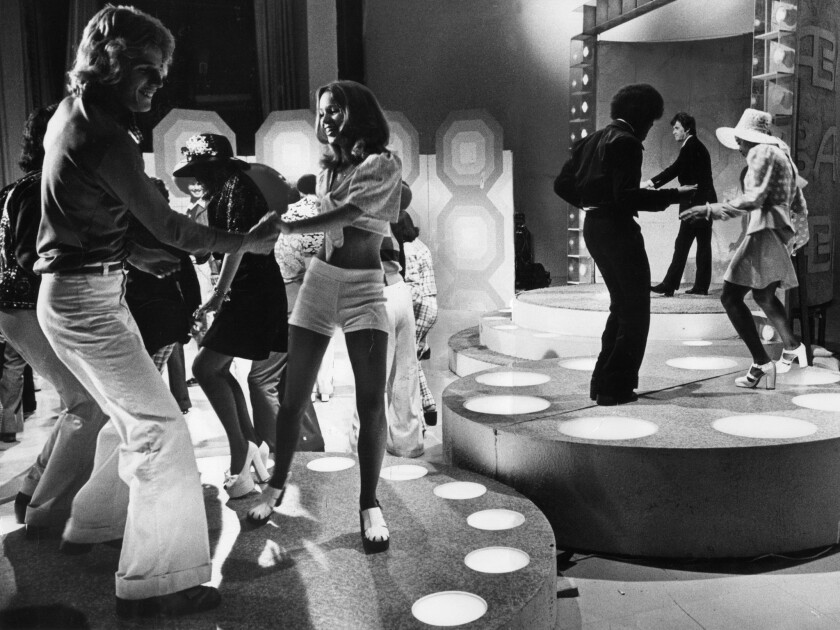
As we all know, The United States had gone through a lot in the first chunk of the 20th century: The Great Depression, World War II, the Korean War, and McCarthyism. Americans were tired of this depressing, war-torn life so during the 1950s, there was a period of rebirth of consumerism, when people focused on enjoying life once again. This idea gave way to many new developments: idyllic life in the suburbs, dancing, rock n’ roll, etc. One particular example of this idea was American Bandstand, an American music and dance performance program that aired between 1952 and 1989.

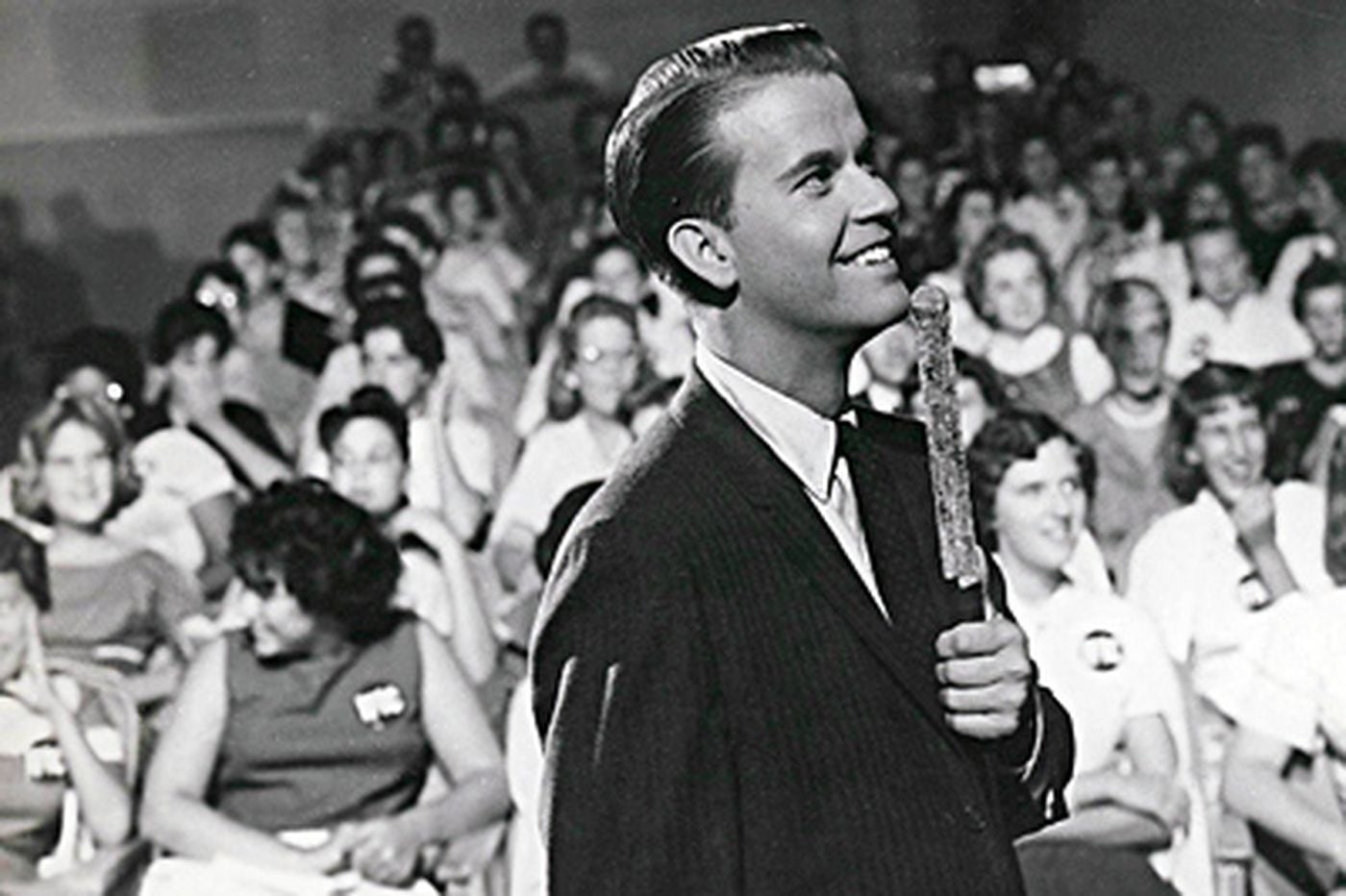
It all started when a man named Dick Clark hosted his first afternoon television show called “Bandstand”. Broadcasted in Philadelphia, Clark’s show played new rock n’ roll music and featured teenagers dancing to the music. At first, the show primarily featured musical films with occasional studio guests: the dancing was almost accidental. After people expressed their like for these dancing teenagers, Bob Horn, the television host, changed the show into a dancing program, where teenagers danced on camera while records played. After Horn was replaced by Dick Clark, Clark quickly put his own spin on the show. He featured musical guests lip-synching their songs and his teenage audience rated new records. 

Bandstand also played a critical role in America’s view of rock n’ roll and the music business. By featuring many different popular rock n’ roll artists’ music, the population became more receptive to that kind of music (which was previously looked down upon). Not only did it open new doorways for the music business, but adults were more accepting of letting rock n’ roll into their houses.

In regards to race, Dick Clark did allow black recording artists as guests on his show. However, under Bob Horn, bandstand’s studio audience remained highly segregated and controlled by gatekeepers, even implementing outright discriminatory policies. When Clark took over, in 1956, the show was highly segregated and even in 1957, there was evidence that admission for black teenagers to be on the show was nearly impossible. While Clark did stand up for some aspects of fair African American treatment, some believed that Bandstand missed an opportunity to further the civil rights movement, given its large sphere of influence and sway over young people’s culture.

American Bandstand played a pivotal role in America’s popular culture. Through its music and dancing, Bandstand helped form modern culture today.
Image result for american bandstandImage result for american bandstand

Sources: 

Friday, January 24, 2020

Joseph McCarthy, McCarthyism, and the Red Scare

      Following the conclusion of the Second World War, it was quickly becoming clear that a new competition between the Soviet Union and the United States was being created. The American people were told by politicians that Stalin's ultimate goal was world conquest under Soviet rule and the spread of communism. Furthermore, the American liberties prized by Americans for generations would be destroyed. And there was much reason to believe this, with Soviet expansion into Eastern Europe, a communist victory in China, and other civil wars across the globe. It appeared to the average American that communism was spreading across the world, and as they were told by their leaders, this would be the end of American freedoms and potentially even America itself. As a result, the American people were terrified. Furthermore, perhaps what some Americans were even more fearful of, was communism spreading in America itself.
      One figure who capitalized on these fears was Joseph McCarthy, a US Senator from Wisconsin. From the late 1940s to the early 1950s, Republican Senator Joseph McCarthy accused politicians of being communists. At the same time, the US government was holding trials for suspected communists in Hollywood and enforced political loyalty tests were being done on government employees. This fear of communism, this Red Scare, drove many Americans into extreme paranoia of communism, believing the baseless accusations such as those that Joseph McCarthy espoused.
      When McCarthy began accusing members of the US government for being communists, and especially at the peak of his power, no one dared to challenge him, unless they wanted to be labeled a communist. The worst thing a person could be called or known as at the time was a communist. And as stated, while McCarthy had no evidence for his claims, he didn't need any. Most people blatantly believed McCarthy, wanting to feel safe and secure, that someone knew who the communists were in the US government when no one else did. Even Eisenhower, famous American general and President at the time, was afraid to confront McCarthy. An attempt at publicly attacking, undermining, or going against with much of was McCarthy was espousing would result in Eisenhower appearing soft on the supposed internal spread of communism. While Eisenhower did actively attempt to undermine McCarthy and his claims, he never made any public comments denouncing them, leading to the continued power of McCarthy for some time.
Sen Joseph McCarthy – an American Hero
      Ultimately, however, McCarthy's downfall first began when he aimed his sights at the US Army and the Eisenhower administration itself. This forced Eisenhower to fight back at McCarthy. The Army compiled dirt on McCarthy lawyer and eventually leaked the information, making it appear that McCarthy was guilty of an abuse of power. Following this, Eisenhower pushed for an investigation into McCarthy's abuse of power, leading to a Senate vote which voted 67 to 22 to condemn McCarthy. Following this condemnation, McCarthy's power was essentially gone.
      The Red Scare certainly outlived McCarthy but as the years and eventually, decades wore on the fear of communism subsided. Communism was still viewed as socially unacceptable in America until perhaps the modern-day, but by no means was this hatred and refusal of communism as extreme as it was at the height of McCarthy.


Sources:
https://millercenter.org/the-presidency/educational-resources/age-of-eisenhower/mcarthyism-red-scare
https://www.history.com/topics/cold-war/joseph-mccarthy
https://www.history.com/topics/cold-war/red-scare
https://www.history.com/this-day-in-history/mccarthy-condemned-by-senate

Thursday, January 23, 2020

Lloyd Price

Image result for lloyd priceIn the late 1940s and early 1950s, the golden age of rock and roll became a prevalent source of music that combined the likes of jazz, gospel, blues, and country into a single genre. This genre produced the likes of Elvis "The King" Presley,  Antoine "Fats" Domino Jr, and Little Richard. However, a less known but as influence artist, Lloyd Price was born in New Orleans Suburbs of Kenner, Louisiana on March 9th, 1933. Price was the eighth in the family of eleven children. Immediately at an early age, Price was exposed to the sounds of music. He was given formal musical training in both the trumpet and piano, sang in his church's gospel church, and played in a band with his brother Leo who played for the local audience and radio stations.

Price worked in his mother's restaurant, Fish 'n' Fry, where one of New Orlean's big band musicians Dave Bartholomew discovered him playing the piano. Immediately, Bartholomew asked Price to come to his label's studio and introduced him to Art Rupe, the founder of Specialty Records. Price played his original "Lawdy Miss Clawdy" to Rupe and he quickly told Price to come back in two weeks to record the full song. Those two weeks later, joined with Bartholomew's band, Price and company recorded his song in just one rehearsal and one take. On June 1952, "Lawdy Miss Clawdy" became the Number One R&B Record in America, where it spent seven weeks at number one on the Billboard R&B chart, and became the R&B Record of the Year. It had enormous sales and was the only song that both Elvis and the Beatles covered later in their careers. This song was one of the most important and influential songs that gave way to the transformation from rhythm & blues to rock & roll.  He later released four more songs with Specialty Records, "Oooh, Oooh, Oooh," "Restless Heart," "Tell Me Pretty Baby," and "Ain't It a Shame", all however never reached the charts.

Unluckily, his heightened success fell when Price was drafted into the Korea War on November 1953. To his surprise when he returned to the states on October 1955, he saw that he was replaced by a new up and coming artist,  Little Richard. He decided to settle down in Washington D.C. where he formed his own record, KRC Records. Through this label, he recorded and released multiple national hits from 1957 to 1959. Throughout the rest of his career, he opened up a club called "The Turntable" in New York, founded two more labels, Double L and Turntable, moved to Nigeria after his partner was murdered in 1969, toured Europe in 1993, and went on his final tour with soul legends Jerry Butler, Gene Chandler, and Ben E. King called the "Four Kings of Rhythm and Blues" tour. By the end of his career, he released twenty-seven albums over fifty years.

Price received the Pioneer Award at the sixth annual Rhythm and Blues Foundation ceremonies in Los Angeles in 1994 and was inducted into the Rock and Roll Hall of Fame in 1998. On March 9, 2010, his 77th birthday, in New Orleans, Price was inducted into the Louisiana Music Hall of Fame. He currently manages Icon Food Brands which makes a line of primarily Southern-style foods, has an avenue named after him as well as an annual "Lloyd Price Day" celebrated in his hometown, Kenner, Louisiana. 

https://www.thehistorymakers.org/biography/lloyd-price
https://www.rockhall.com/inductees/lloyd-price
https://www.imdb.com/name/nm0697012/bio
https://peoplepill.com/people/lloyd-price/

I Love Lucy

I Love Lucy was a popular American sitcom television show in the 50’s following the life of Lucy Riccardo, a middle-class housewife in New York City, and her husband Ricky Riccardo, a bandleader and singer. Many of the episodes follow the premise of Lucy concocting plans with her best friends to perform alongside her husband and join the show business. The show ran for six seasons and was the most watched television show in America for four of those six seasons.

However, I Love Lucy was more than just a show about the domestic life of a middle class family. Lucy pushed the boundaries of the expectations of women at the time of simply staying at home. She took on a job at one point, schemed to make money, and even disguised herself to perform at the club. Lucy also challenged the husband-wife dynamic at the time that enforced male superiority: Lucy often ‘disobeyed’ her husband and did things her own way. Unfortunately, Lucy and her friend Ethel would often end up retreating back to domestic life at the end of each little adventure. There is room for debate as to whether I Love Lucy was conservative or not, but nevertheless, the show was coveted by many.

In terms of the impact I Love Lucy and television had on American culture, the show shaped what women bought in department stores. By October 1952, there were 2800 retailers selling dresses, blouses, sweaters, aprons, pajamas and more inspired by the attire of Lucy. In a month, 30,000 Lucy dresses were sold, along with 32,000 heart-adorned aprons and 35,000 dolls were. Lucy and Ricky pajamas sold out in two weeks. Dolls of the couple flew off the shelf like hot cakes. This new age of television shaped not only the domestic life of Americans, but also their buying habits.

Here is a funny clip of Lucy working at a chocolate factory:


Sources: 

Wednesday, January 22, 2020

The B-52 Stratofortress, A Revolutionary Bomber

The B-52 bomber is one of the most important planes America has ever produced. Initially, it was made to serve as an atomic bomber, flying long distances and dropping nuclear weapons. The B-52, however, was so versatile that Boeing modified the B-52 and created many iterations for different missions. The plane is still in service today, with many modern modifications done to it.

U.S. Air Force B-52G with cruise missiles and short-range attack missiles.The B-52 project had a rough start, however, with early plans showing a straight wing 6 propeller engine plane. However, they eventually scrapped that idea and implemented jet engines. They made 4 twin pods under each wing. Each twin-pod consisted of 2 jet engines, totaling 8 jet engines on the plane. There were a variety of different iterations too, ranging from B-52A to B-52H, a total of 8 different B-52's. The plane broke many new world records too.  It cut the round-the-world speed record in half, and in January 1962, it flew 12,500 miles nonstop from Japan to Spain without refueling. This flight alone broke 11 distance and speed records. Despite being built and initially planned in the 1960s, engineering analyses show that the B-52 will continue to serve in the air force well into the 21st century, beyond 2040 in fact.

Some statistics of the plane: Wingspan is 185 feet with a length of 160 feet, maximum speed at 55000 feet in the air is 0.9 Mach (595 miles-per-hour) with a lower altitude the plane maxes out at 0.5 Mach (375 miles-per-hour). Being a bomber, the plane was not very capable of defending itself if it were attacked. The main weapon is a remote-controlled gun turret in the tail of the plane

But an incident happened on January 23rd, 1961. A B-52 carrying two 3-4 megaton nuclear bombs broke up in the air. What happened on that day could've been fatal to all of North Carolina, estimates show that if the bombs did detonate, it would have a 100% kill zone within 8.5 miles of detonation. The reason why the plane broke up is because of a fuel leak in the wing, losing 37000 pounds of fuel in 3 minutes. the crew ejected, 2 of which died in the crash, 5 safely ejected, and 1 died on the landing of the parachute. Boeing saw this and reasoned that the extra fuel in the wings added stress to the plane which ultimately made it fail and break up mid-flight.

Goldsboro Mk 39 Bomb 1-close-up.jpegBut why did the bombs not detonate? Turns out the bombs almost did except the safety switch was still in the safe position despite the bomb completing the rest of the arming sequence. There would not have been a possibility of the bomb detonating because of the safety arm/switch. The other bomb went 700 miles per hour into a muddy pit and disintegrated. The first bomb was standing straight up with its parachute stuck in a tree while the second bomb was abandoned due to the constant flooding of the pit.


Sources:
https://www.britannica.com/technology/B-52
https://en.wikipedia.org/wiki/1961_Goldsboro_B-52_crash
https://www.boeing.com/history/products/b-52-stratofortress.page